How long a roof inspection takes
Plan on 60 to 90 minutes. The inspection itself takes 50 to 75 minutes depending on the size of the roof, and the walkthrough takes another 10 to 15.
Most of that time is on the roof and in the attic. The attic shows what the roof surface hides: ventilation, insulation and the underside of the deck.
For comparison, HomeGuide, one of the cost guides above, puts a professional roof inspection at anywhere from 45 minutes to several hours, depending on the size of the roof and how much damage there is.
What an inspector looks for on an Arizona roof
In Phoenix, a roof rarely fails because of rain. It fails because of sun and heat, and it fails at the details first: the flashings, the laps and the fasteners that daily expansion and contraction work loose.
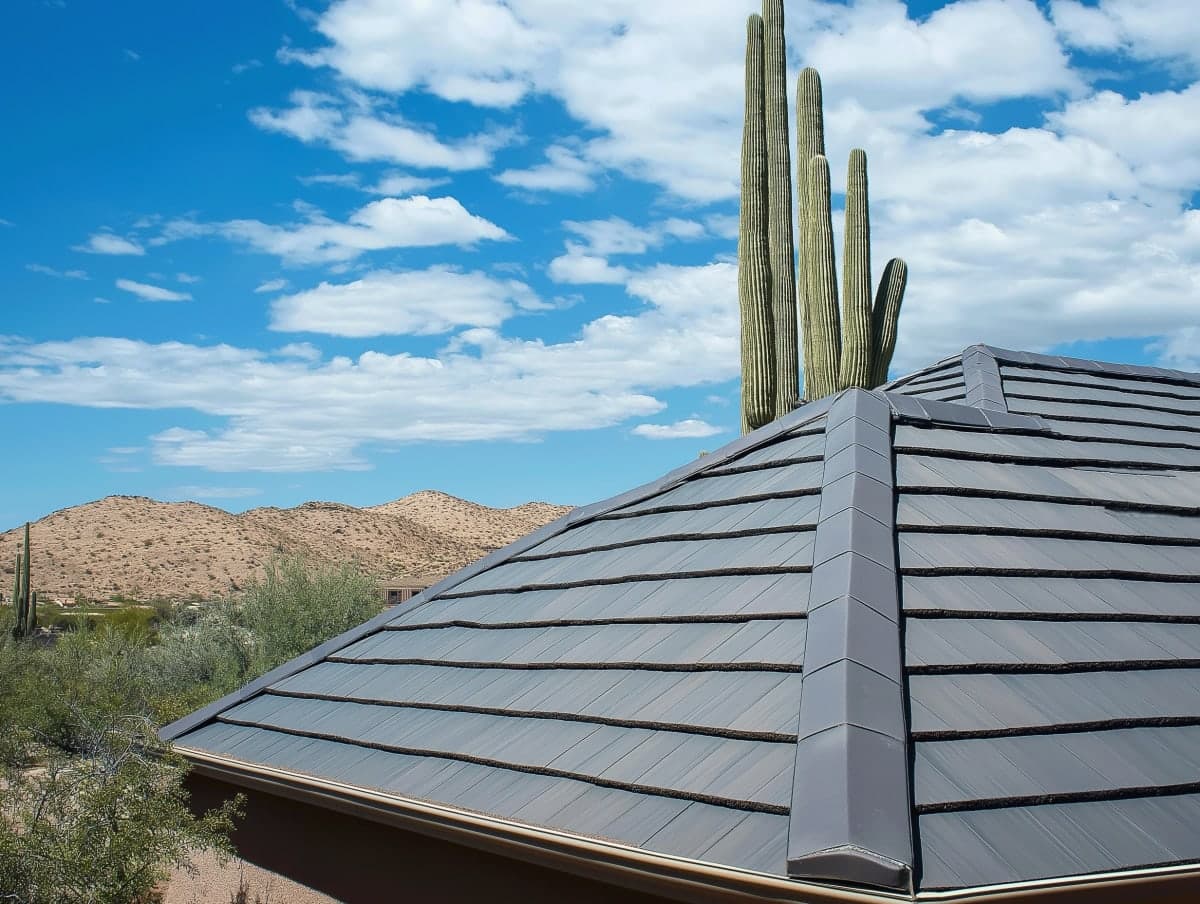
On a tile roof, the tile is not the waterproofing. It sheds water and takes the sun. The underlayment beneath it is what keeps the house dry, and it is the layer that ages out first. So on tile, an inspection starts at the ridges, hips and valleys, where the trapped heat is highest, and at any tile cracked by foot traffic from solar or air conditioning work.
The part of a monsoon storm that damages roofs is the outflow wind ahead of the rain, not the rain. It lifts shingles, slides tile at hips and ridges, and drives water sideways under flashing. Arizona's monsoon season runs from June 15 to September 30.
Flat and coated roofs get their own checks. The first visible sign of an aging roof coating is chalking, a white powder that comes off on your hand as the coating breaks down in the sun. In Tucson, more flat roof leaks trace back to drainage than to the open field of the roof: a scupper blocked with dust or grit turns the first heavy storm into standing water.
In the high country, freeze thaw cycling widens small defects every winter, and ice dams start with heat escaping from an attic, which is one more reason the attic is part of every inspection.
When paying for an independent roof inspection makes sense
Our inspection is free because we sell roofs. That makes it the wrong tool for a few jobs, and it is worth being plain about which ones.
When you are buying a home. A general home inspection covers the roof, but under the InterNACHI Standards of Practice a home inspector inspects it from ground level or the eaves, and is not required to walk on it, predict how long it will last, or certify it. If the roof is old or tile, or the home inspector flags it, a separate roof inspection while you can still act on what it finds is worth paying for.
When someone needs it in writing. A lender, an insurer or a buyer may ask for a roof report in writing, or a certification. We do not provide either.
When you want a second opinion on a quote, including ours. An inspector who is not bidding on the work has no reason to find more or less than is there.
If you hire a roofer, check the license. Arizona roofing contractors are licensed by the Arizona Registrar of Contractors, the register is public, and ours is ROC #358383.
Sources: InterNACHI Home Inspection Standards of Practice, Arizona Registrar of Contractors.
What a roof certification is, and why we do not issue one
A roof certification is a document issued after an inspection, giving the inspector's opinion of the roof's current condition and how many more years it is likely to last. It may be asked for when a home is sold or refinanced, or when the owner changes insurer.
It is an expert opinion, not a guarantee against leaks. HomeGuide says a roof must be leak-free, with 2 to 5 years of useful life remaining, to be certified. Angi and HomeGuide both price the certification as an addition to an inspection.
Vero Exteriors does not issue roof certifications, or letters for insurers or lenders. Our inspection ends in a conversation, not a document. If you need a certification, ask whoever requested it which kinds they accept before you pay for one.
Definitions from the Angi, HomeGuide and Fixr cost guides cited above, read on September 25, 2026.