Westlake Tile Product Lines
Three premium tile options engineered for Arizona's climate, each offering decades of beauty and protection.

Concrete Tile
30+ yearsDurable and affordable, concrete tile delivers classic Southwestern aesthetics with excellent color retention. Lightweight compared to clay at 8-10 lbs/sq ft.
- Most cost-effective tile option
- Class A fire rating
- Wide range of profiles and colors
- Compatible with Cool Roof System
- UV-resistant finish for Arizona sun

Clay Tile (ClayLite)
60+ yearsWestlake's ClayLite line offers authentic clay tile beauty at as much as 40% less weight than its traditional clay tile, making it suitable for more roof structures without reinforcement.
- Authentic Southwestern appearance
- Superior color permanence (natural clay)
- Natural thermal mass for energy efficiency
- Low water absorption rate
- Premium resale value

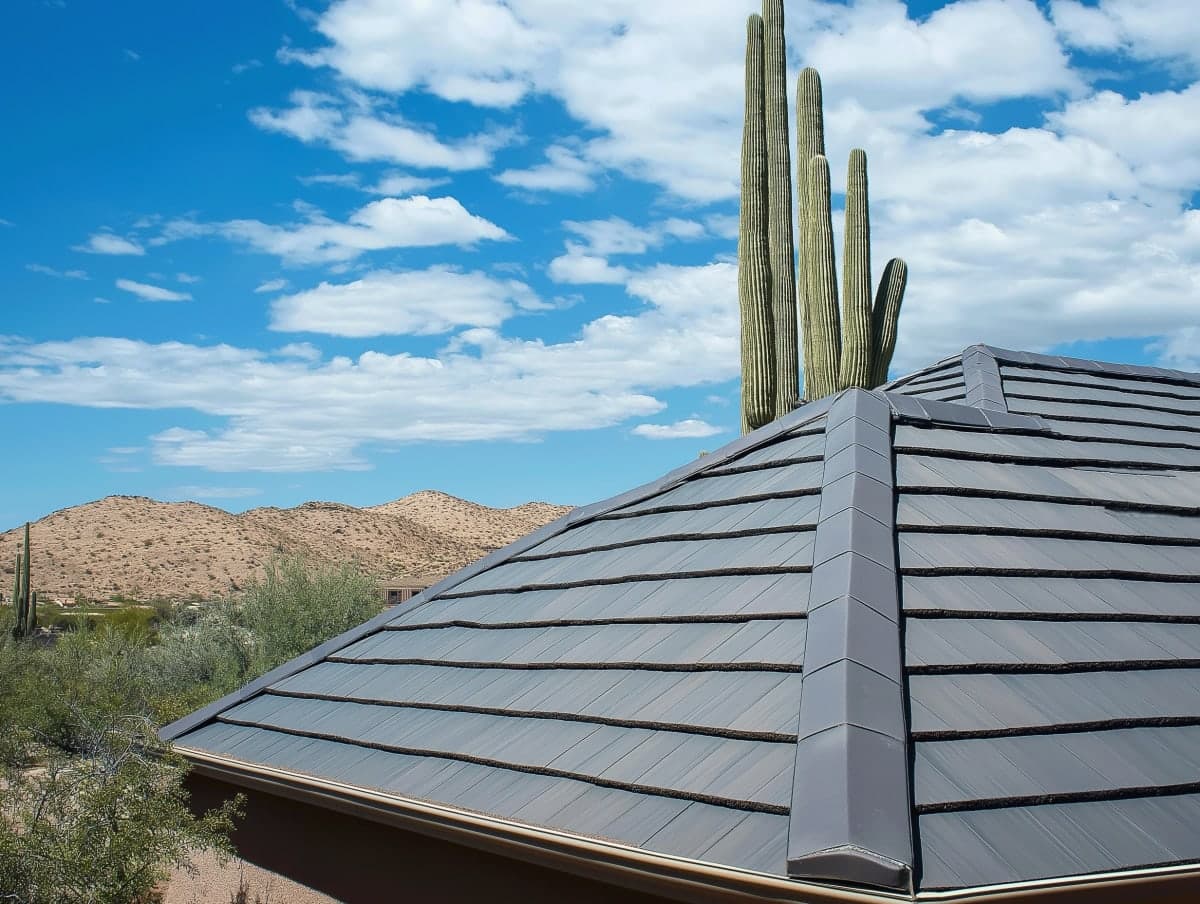
Slate Alternative
30+ yearsAchieve the upscale look of natural slate without the extreme weight or cost. Engineered concrete delivers impact resistance and beauty for luxury Arizona homes.
- Luxury slate appearance at fraction of cost
- Lightweight (7-9 lbs/sq ft)
- No structural reinforcement required
- Impact resistant profiles
- Multiple color blends available
The Cool Roof System
A 5-component ventilation system that creates continuous airflow under your tile roof, dramatically reducing heat transfer and cooling costs.

High-Performance Underlayment
Synthetic underlayment provides a secondary water barrier over the roof deck, protecting against wind-driven rain and condensation.
Vented Eave Risers
Installed at the eave line to create intake airflow, drawing cooler outside air under the tile and across the roof deck.
Elevated Batten System
Raised battens create an air channel between tiles and underlayment, allowing convective airflow that carries heat away from the roof deck.
Vented Ridge
Exhaust ventilation at the ridge peak allows hot air to escape, completing the continuous airflow cycle from eave to ridge.
Westlake Roof Tiles
Concrete or clay tiles with high solar reflectance and thermal emittance properties that reduce heat absorption.
Arizona Impact: In July field tests, a conventional shingle roof's attic ran about 10 to 15°F warmer than the attics under tile roofs (Oak Ridge National Laboratory, 2005), a gap that matters through Arizona's 6+ month cooling season.
Built for Arizona Conditions
UV Resistance
Tile roofing is naturally UV-resistant and will not crack, curl, or deteriorate under Arizona's intense sun exposure the way organic materials can.
Monsoon Protection
Rated for winds up to 150 MPH with interlocking design. Tile weight provides natural wind resistance superior to shingles.
Heat Reduction
Tile's thermal mass and the vented air channel the Cool Roof System adds let about 40 to 50% less heat reach the ceiling than a dark shingle roof in summer field tests (Florida Solar Energy Center, 1995; Oak Ridge National Laboratory, 2005).
Class A Fire Rating
Non-combustible concrete and clay tiles carry the highest fire rating available, critical protection in wildfire-prone Arizona areas.
Explore Related Pages
Ready for Tile Roofing?
Let our team help you choose the right Westlake tile product and determine if the Cool Roof System is right for your Arizona home.
- 50+ year tile lifespan with 30-year warranty
- Cool Roof System with natural ventilation
- Class A fire-rated non-combustible tiles
- Free roof inspection and tile consultation
Schedule Your Free Inspection
Get expert advice on Westlake tile products for your Arizona home.
Westlake Royal Roofing FAQs
Common questions about Westlake tile roofing and the Cool Roof System
What is the Westlake Royal Cool Roof System?
The Westlake Royal Cool Roof System is a 5-component ventilation system that creates continuous airflow under your tile roof. It includes high-performance underlayment, vented eave risers, an elevated batten system, vented ridge, and reflective tiles. Together, these components let air flow beneath the tiles and carry heat out at the ridge, slowing the heat moving into your attic space.
How long do Westlake tile roofs last in Arizona?
Westlake concrete tile roofs typically last 30-50+ years in Arizona, while clay tile (ClayLite) can last 60+ years. The extreme durability of tile is one of its biggest advantages in Arizona's climate: tile won't crack, warp, or deteriorate from UV exposure like other materials. Proper installation and maintenance are key to achieving maximum lifespan.
Is tile roofing more expensive than shingles?
Tile roofing has a higher upfront cost than asphalt shingles, but the total cost of ownership is often lower. Tile lasts 2-3x longer than shingles (50+ years vs 20-30) and requires less maintenance. When amortized over its lifespan, tile often costs less per year than shingles.
Can my roof structure support tile roofing?
Most Arizona homes built after 1980 are framed to support tile roofing. Concrete tile weighs 8-10 lbs/sq ft while clay is slightly heavier. Westlake says its ClayLite tile weighs as much as 40% less than its traditional clay tile. During your free inspection, we assess your roof structure to confirm suitability and recommend the best product for your home.
What colors and profiles are available in Westlake tile?
Westlake offers dozens of color blends and multiple profiles including flat, low-profile S-tile, high-profile S-tile, and shake/slate replicas. Popular Arizona choices include earth tones like Charcoal Brown Blend, Barro Rojo, and Merlot Blend that complement desert landscaping and stucco exteriors.
Does tile roofing help with Arizona monsoon storms?
Yes. Westlake tile products are rated for winds up to 150 MPH, providing excellent monsoon protection. The interlocking design and weight of tile makes it far more wind-resistant than shingles. Clay and concrete tile also withstand hail impact better than most roofing materials and carry a Class A fire rating.
How does tile roofing reduce energy costs in Arizona?
Tile roofing reduces energy costs in two ways: the natural thermal mass of tile slows heat transfer into your home, and the Westlake Cool Roof System creates an air channel that ventilates heat away from the roof deck. In a Florida field test, a home with white concrete tile used 22% less cooling energy than an identical home with a dark asphalt shingle roof, and terra cotta tile saved about 5% (Florida Solar Energy Center, 2002).