Your tile roof might last 50 years, but the underlayment beneath it needs replacement every 15-20 years. Learn why this critical maintenance prevents catastrophic leaks and how to recognize the warning signs.
The Leak That Cost Seven Times What Prevention Would Have
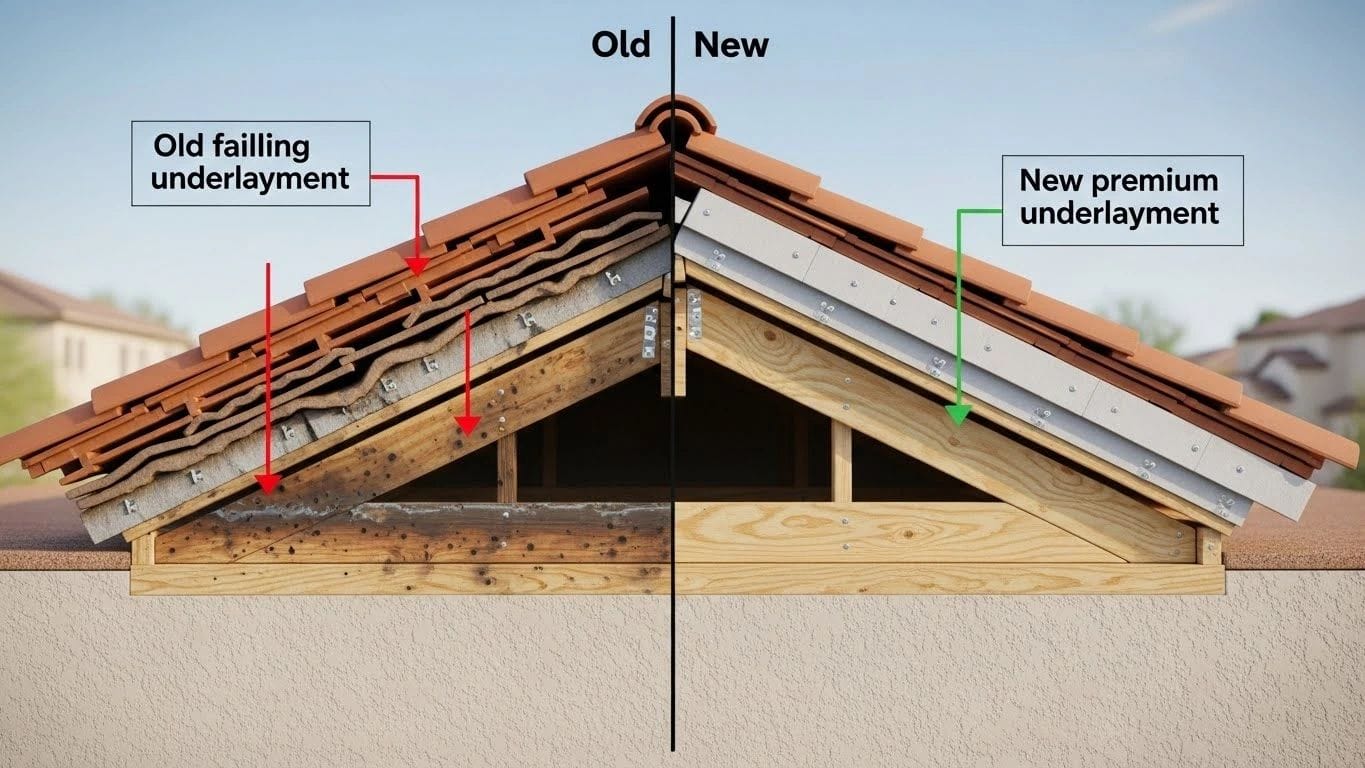
Three months ago, we received an emergency call from a Paradise Valley homeowner facing interior water damage throughout her second story. Her 18-year-old tile roof looked beautiful from the street: no missing tiles, no obvious damage. But when we pulled back sections during inspection, we discovered completely deteriorated underlayment. Arizona's extreme temperatures had reduced what was once a protective waterproof barrier to brittle fragments that crumbled at touch. Water had been infiltrating her home for months, saturating insulation, rotting framing, and creating mold conditions that required extensive remediation.
The total damage cost roughly seven times what proactive underlayment replacement would have, including roof deck repairs, insulation replacement, interior repairs, and mold remediation. This scenario repeats across Phoenix, Scottsdale, and Tucson with depressing regularity because homeowners don't understand that tile roofs have two distinct maintenance timelines.
Tile roofs last 40-50 years (Source: Tile Roofing Industry Alliance). Underlayment lasts 15-20 years. This mismatch creates a dangerous assumption gap where homeowners believe their beautiful tile roof equals comprehensive protection, until water infiltration proves otherwise.
Understanding Underlayment: Your Roof's Hidden Hero
Underlayment serves as your roof's waterproof membrane, the actual barrier preventing water from reaching your home's interior. Tiles shed bulk rainwater, but wind-driven moisture, capillary action, and simple physics mean water reaches the underlayment layer during every significant storm. In Arizona, underlayment faces additional challenges beyond water protection: extreme UV exposure when tiles shift slightly, temperature fluctuations from 40°F winter nights to 180°F summer afternoons, and monsoon-driven moisture that tests adhesion and integrity.
Traditional felt underlayments were never designed for Arizona's climate. Modern synthetic alternatives last longer and perform better, but even premium products have defined lifespans. The critical message: underlayment replacement isn't optional maintenance; it's essential protection that prevents catastrophic damage.
⏳
15-20 Years
Maximum Underlayment Lifespan in Arizona Climate
💧
Most
Tile Roof Leaks Are Caused by Underlayment Failure
💰
~7x
Potential Cost of Reactive Repairs vs. Preventive Replacement
Warning Signs: When to Schedule Underlayment Inspection
Unlike obvious roof damage visible from ground level, underlayment deterioration hides beneath tiles. However, several indicators suggest it's time for professional assessment:
✓Roof age approaching 15 years: Regardless of appearance, schedule inspection when your tile roof reaches mid-teens; prevention beats reaction every time
✓Interior ceiling stains: Any new water stains, even minor discoloration, warrant immediate professional inspection to determine source and extent
✓Attic moisture or mold: Condensation patterns, wet insulation, or musty odors indicate water infiltration that's been occurring for extended periods
✓Visible underlayment degradation: If you can see underlayment from ground level through tile gaps, it has deteriorated severely and demands immediate attention
✓Recent severe weather: Major monsoon events with wind-driven rain can accelerate existing underlayment weaknesses into active failures
✓Energy bill increases: Moisture-compromised insulation loses R-value dramatically; unexplained cooling cost increases may indicate hidden water damage
The Underlayment Replacement Process
Many homeowners assume underlayment replacement requires complete tile removal and reinstallation, a cost-prohibitive proposition that leads to delayed maintenance. In reality, experienced contractors can replace underlayment while preserving most existing tiles through careful removal, strategic sequencing, and meticulous reinstallation. Here's what quality underlayment replacement involves:
Step 1: Comprehensive Documentation
We photograph tile layout patterns, number tiles for reassembly, and document any existing damage before beginning removal. This attention to detail ensures your roof looks identical post-replacement while functioning far better.
Step 2: Careful Tile Removal and Storage
Experienced crews systematically remove tiles in reverse installation order, stacking them carefully to prevent damage. Breakage during removal is inevitable (typically 5-10% depending on tile age and condition), which is why we always secure replacement tiles matching your specific profile and color before beginning work.
Step 3: Deck Inspection and Repair
With underlayment removed, we inspect roof decking for water damage, rot, or structural concerns. This is the moment hidden problems reveal themselves: typically 15-25% of underlayment replacement projects require some deck board replacement. While additional cost is never welcome, discovering and addressing structural issues prevents future catastrophic failure.
Step 4: Premium Underlayment Installation
We install premium synthetic underlayment rated for extreme temperatures and UV exposure. Multiple layers at critical areas (valleys, penetrations, edges) provide redundant protection. This isn't the place to cut costs; underlayment quality directly determines how long before you repeat this process.
Step 5: Tile Reinstallation and Finishing
Tiles return to their original positions following documented patterns. We replace damaged tiles with matched replacements and verify proper overlap, alignment, and securing. The finished roof should look untouched from ground level while providing decades of renewed protection underneath.
Cost Factors and Budgeting Realities
Underlayment replacement costs vary based on roof complexity, tile type, and accessibility. Concrete tiles allow slightly faster work than clay tiles. Single-story homes cost less than two-story. Simple roof planes cost less than complex geometries with multiple valleys and dormers. Additional costs arise from deck repairs (unpredictable until inspection), replacement tiles for breakage, and permit fees. We provide detailed estimates after inspection so you know exactly what to expect.
Many homeowners struggle with the timing: investing in maintenance when the roof looks perfect feels unnecessary until you understand the stakes. Frame it differently: spending a modest amount proactively protects your home from damage that could cost five to seven times more. That's not expense; that's insurance.
"We scheduled underlayment replacement at 17 years based on Vero's recommendation, before we saw any problems. It felt like a big expense at the time, but six months later our neighbors had a leak that caused extensive damage. Now I understand we didn't spend money; we saved it."
Financing Preventive Maintenance
If underlayment replacement strains your current budget, financing through partners like GoodLeap, PowerPay, Foundation Finance, and Slice makes this essential maintenance manageable. Zero-down options on qualifying programs and flexible payment options turn a significant expense into manageable payments over time. Many homeowners discover their payment costs less than their homeowners insurance deductible would be if water damage occurred, making financing not just affordable but financially prudent.
Why GAF Master Elite Certification Matters for Underlayment Work
Underlayment replacement requires genuine expertise; improper installation creates problems worse than deteriorated material. Our GAF Master Elite certification demonstrates commitment to ongoing training, proper installation techniques, and quality standards that protect your investment. We use premium materials from established manufacturers, follow strict installation protocols, and provide comprehensive warranties covering both materials and workmanship. Budget contractors cutting corners on underlayment quality or installation procedures save homeowners nothing; they merely delay problems while making them worse.
Schedule Your Underlayment Inspection
If your tile roof is approaching 15 years old or showing any warning signs, schedule a free comprehensive inspection. We'll assess underlayment condition, document any concerns, provide detailed replacement estimates if needed, and explain financing options. Protect your home before small problems become catastrophic damage.
Related Insights
7 Signs You Need a New Roof in Arizona (And How Long Roofing Materials Last)
Your Arizona roof takes constant punishment from UV exposure, monsoon storms, and extreme heat. Here are seven warning signs that repair is no longer enough, plus a guide to how long each roofing material actually lasts in our climate.
Your roof is your home’s first defense against Arizona heat, wind, and storms. Catching these warning signs early can prevent costly structural repairs and interior damage.
Your Essential Fall Roof Maintenance Checklist: Protecting Phoenix and Tucson Homes After Monsoon Season
November's perfect weather creates the ideal window for critical roof maintenance. Learn how to protect your investment and avoid costly winter surprises with our post-monsoon inspection guide.
Our premium roofing solutions provide exceptional protection against extreme weather while enhancing your home's value. Get started with flexible financing options and industry-leading warranties.